

About this service
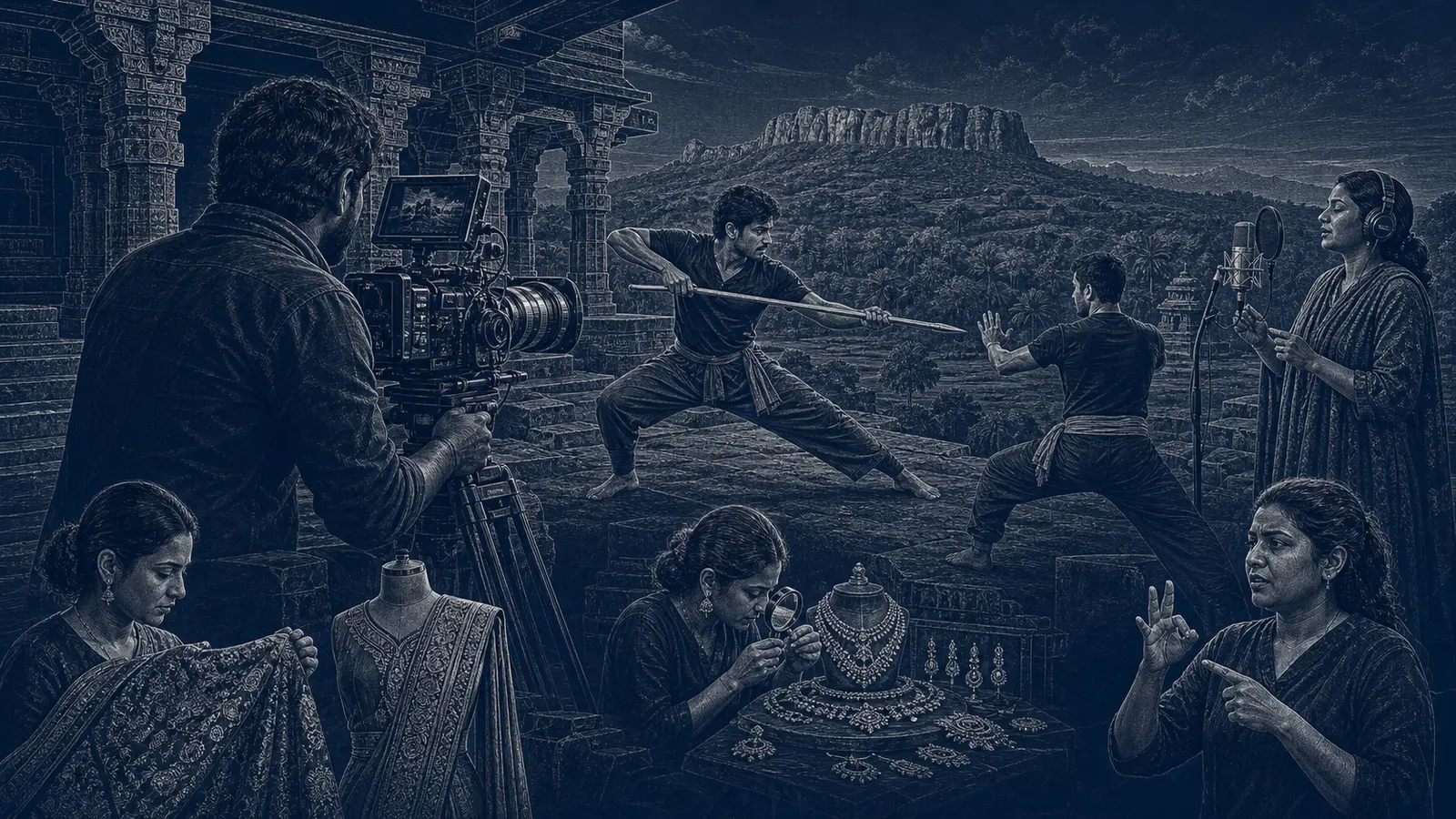
Debashis Productions provides real-world documentary and reference-video collection for game studios, animation teams, VFX pipelines, immersive-media developers, and physical or generative AI teams building culturally grounded interactive worlds. Programs can document tribal and community life with appropriate local participation, choreographed mixed-martial-arts movement, safe demonstrations of ancient weapons, historic architecture, natural landscapes, traditional and contemporary fashion, jewellery craftsmanship, regional vocal languages, and sign-language communication. Capture plans are adapted to the target use case, including character and combat-animation reference, gesture libraries, environment and worldbuilding research, costume and material reference, cinematic previsualization, voice or interaction datasets, and visual-effects production. The service supports observational documentary footage and directed multi-angle demonstrations. Buyers can define shot lists, actions, camera movement, frame rate, resolution, lighting, continuity, metadata, release requirements, and environment diversity. Debashis Productions can combine close detail, full-body performance, object interaction, architecture, landscape, ambience, and communication footage into a consistent production package. Each engagement begins with a creative and technical brief covering intended downstream use, cultural context, permissions, safety, locations, participants, expected outputs, and acceptance criteria. A pilot can be used to validate visual language and production specifications before a larger collection schedule.
Collection methods
Data types
Industries
Geographic coverage
Languages
Delivery formats
Typical deliverables
A structured production package containing approved raw and normalized video, isolated or synchronized audio where scoped, still reference frames, shot and take manifests, participant and location release tracking, camera and lens metadata, scene and action descriptions, language and communication labels, transcripts or captions where commissioned, cultural context notes, rejected-take logs, and optional proxy or editorial review files. Folder structure, naming, codecs, resolution, frame rates, and metadata schemas are agreed before production.
Quality assurance
Production uses approved briefs and shot lists, equipment and audio checks, exposure and focus review, continuity tracking, safe action rehearsal, multi-angle coverage checks, metadata and file-integrity validation, take-level logging, sampled editorial review, duplicate and missing-file checks, and controlled recollection when acceptance criteria are not met. Sensitive cultural context and language labels are reviewed with appropriate participants or knowledgeable collaborators when required by the brief.
Compliance and privacy
All projects must define participant consent, performer and model releases, location and heritage-site permissions, intellectual-property boundaries, permitted game and AI uses, retention, security, and deletion requirements before capture. Community and tribal documentation must be voluntary, non-exploitative, and scoped with culturally appropriate consultation. Ancient-weapon and combat footage must use qualified supervision, safe choreography, controlled locations, and applicable legal permissions. Sign-language and vocal-language data must not be represented as universally interchangeable across regions or communities.