Original three-scene sketch sequence: radiology review, microscope work in a laboratory, and wrist-sensor research. Illustrative, not patient data, clinical findings, or a dataset sample.

See the whole clinical picture.

Imaging, clinical records, and physiological signals. Source data with the context your healthcare AI project needs.

From a record to a requirement

01 / Context

The scan is only the beginning.

An image comes from a particular method, device, and care setting. Compare the acquisition details and represented population before deciding whether a collection fits your project.

Acquisition contextMethod · protocol · site

Acquisition contextMethod · protocol · site

Illustrative study. No real patient data.
Acquisition
Method, body region, and protocol
Coverage
Population, sites, and devices

Questions to take to a supplier

  • Which acquisition methods, sites, and devices are represented?
  • Does the population and care setting match your intended use?

02 / Linkage

Keep each record connected.

A scan, its report, and a later visit are different records. If your project needs them together, inspect the linking method, available dates, and documentation of missing or unmatched records.

Example linked report

DEMO-014
Join key
Case + visit ID
Files
Report + JSON
Timing
Visit timestamp

Check the linking method and field dictionary.

AcquisitionImage + event time
Linked recordShared case + visit ID
Follow-upCheck date + availability

Image and visit

Example linked report

DEMO-014
Join key
Case + visit ID
Files
Report + JSON
Timing
Visit timestamp

Check the linking method and field dictionary.

  1. AcquisitionImage + event time
  2. Linked recordShared case + visit ID
  3. Follow-upCheck date + availability

Ask how missing reports and unavailable follow-up are recorded.

Illustrative study. No real patient data.
Connections
Case and visit identifiers
Timing
Event dates and follow-up coverage

Questions to take to a supplier

  • How do images, reports, and visits connect to the same case?
  • How are missing records and unavailable follow-up documented?

03 / Brief

Source the evidence your model needs.

On Kuinbee, compare published datasets and supplier collection services, or submit a specific requirement for review. Define the population, records, labels, and delivery needs—and confirm the relevant usage and access conditions.

Example linked report

DEMO-014
Join key
Case + visit ID
Files
Report + JSON
Timing
Visit timestamp

Check the linking method and field dictionary.

Illustrative sourcing example

Your healthcare data brief
Population
Adults · outpatient imagingDefine age range and care setting.
Records
Images + linked reportsSpecify case and visit connections.
Labels
Label guide + review methodConfirm definitions and annotation scope.
Delivery
Files + manifestRequest formats, dictionary, and access terms.

Illustrative sourcing exampleYour healthcare data brief

Population
Adults · outpatient imagingDefine age range and care setting.
Records
Images + linked reportsSpecify case and visit connections.
Labels
Label guide + review methodConfirm definitions and annotation scope.
Delivery
Files + manifestRequest formats, dictionary, and access terms.
Illustrative study. No real patient data.
Compare
Coverage, labels, and deliverables
Confirm
Usage rights and access conditions

Questions to take to a supplier

  • Can an existing collection cover the data and connections you need?
  • Which requirements need a supplier collection or a custom brief?

Data in context

Different records. A shared clinical context.

A scan, a consultation, and a measurement capture different parts of care. Choose the data types and connections that your project actually needs.

Pencil sketch of a physician discussing a clinical record on a tablet with an older patient
02 / Clinical recordsClinical language, progression, and outcomes

Follow the record through care.

Visits, lab results, treatments, and follow-up each tell part of the story. Their order and connection matter when a project needs to understand change over time.

Explore healthcare collection services
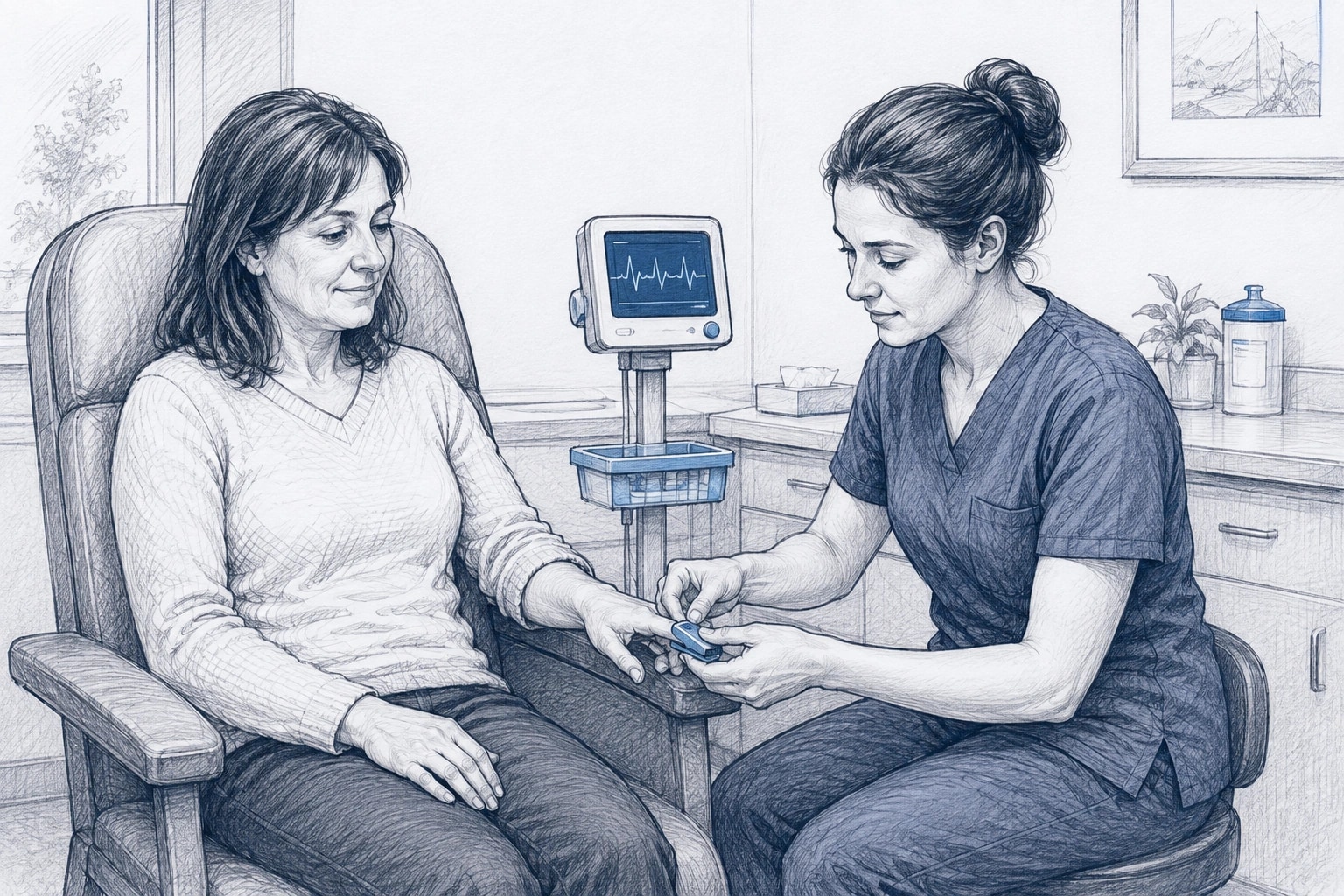
Pencil sketch of a nurse fitting a fingertip sensor to a seated patient beside a small monitor
03 / Physiological signalsMonitoring and physiological analysis

Understand the conditions behind the signal.

A waveform or wearable recording needs its device, sampling rate, and session details. Movement, gaps, and event labels help explain what the recording can support.

Describe your healthcare data need

Your data brief

Start with the model’s task.

Select a use case to compare the details that belong in your data brief.

Medical imaging. An imaging collection needs context about how scans were produced and annotated. Compare the imaging method, represented population, and supporting reports or labels with your project requirements.

An imaging collection needs context about how scans were produced and annotated. Compare the imaging method, represented population, and supporting reports or labels with your project requirements.

Acquisition
Imaging method, body region, acquisition protocol, and file formats.
Coverage
Population, care settings, sites, and devices represented in recordings.
Labels
Label definitions, annotation methods, and reports linked to scans.
Explore collection services

Before you choose

A clearer brief.
A better shortlist.

Check how the data was collected, what it covers, and whether its usage terms fit your project.

Scenes and diagrams are illustrations. Verify each listing’s suitability, usage rights, and access conditions for your project.